



UK defense research company
This organization enabled real-time collaboration through a virtual desktop environment supporting the UK government's nuclear defense program.

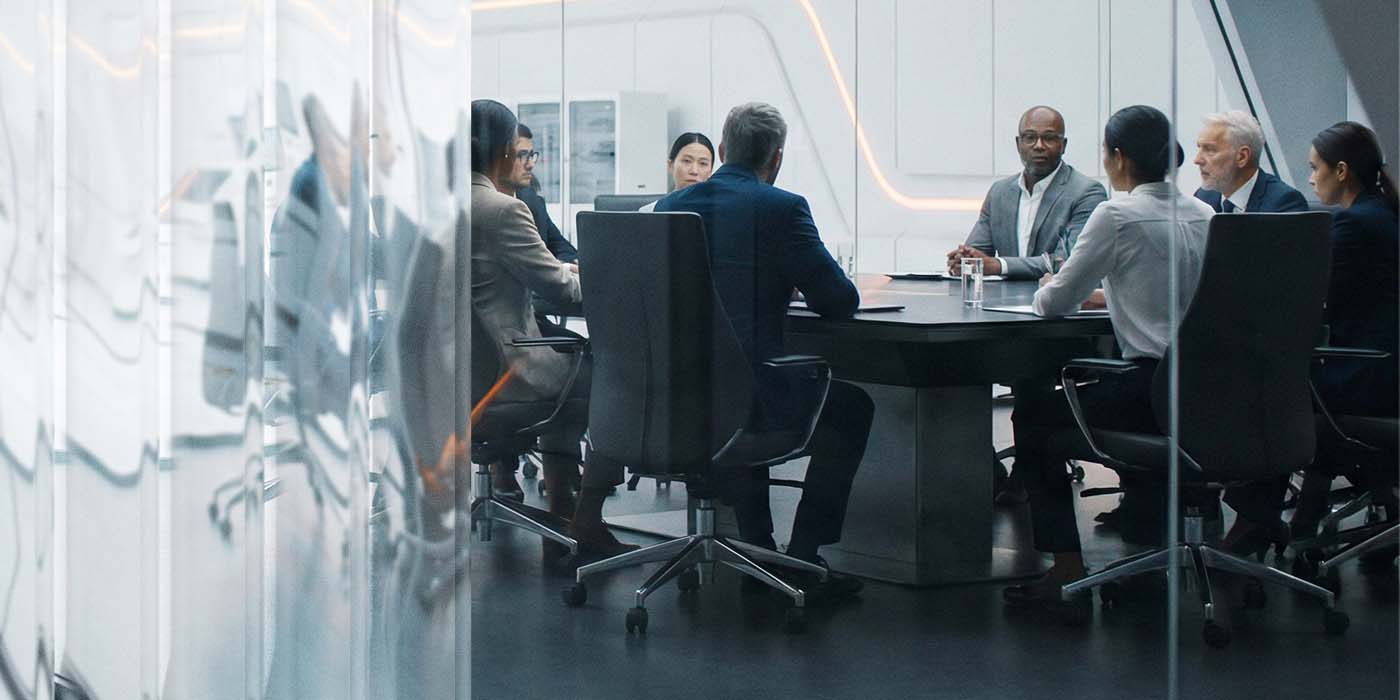
Modern collaboration and meeting spaces built around how hybrid teams work
Experience is the thread that connects every aspect of DXC Workplace Services. It begins with designing digital employee experience solutions that put employees at the center, continues through measuring the lived digital experience and drives continuous improvement based on real-world insights. By connecting experience data, workplace operations and collaboration technologies, DXC helps organizations understand how work happens, remove friction and optimize every interaction through its employee experience services. The result is a workplace that continuously evolves to improve productivity, engagement and business outcomes while ensuring technology delivers the workplace experience services employees expect.
This organization enabled real-time collaboration through a virtual desktop environment supporting the UK government's nuclear defense program.

The Navy improved training quality with a simulation system, cutting time, cost and environmental impact.
By having DXC provide devices as a service, we can focus on our core business while ensuring our employees always have access to the latest technology.
Hybrid work succeeds only when employees can find a space and the right tools to collaborate
Intelligent workspace discovery and booking through Space Management makes it simple to discover and book a room, desk or huddle space from any device. For conferences and other business get-togethers, we offer a standardized, repeatable model for deploying and managing meeting room technology, using HP Poly devices with an optional Cyviz integration, avoid lock-in to a single AV provider, and Microsoft-certified devices replace ad hoc or fragmented AV deployments. Centralized digital signage control can be deployed across office locations. These smart meeting room solutions, help employees collaborate seamlessly across distributed teams, while Microsoft Teams Room solutions and conference room solutions for Microsoft Teams enable a more consistent and productive meeting experience.
IT must be able to see how available physical spaces are used as part of continuously improving employee experience management, as well as if they are underutilized and potentially imposing unnecessary real estate costs on the company. They can get the data to make better space decisions to benefit employees and the business thanks to real-time analytics on occupancy and utilization. Real-time insights provide employee experience analytics that help organizations improve employee experience management and optimize space utilization.
DXC’s Workplace Experience solutions lay the foundation for a modern employee experience management platform that supports an integrated employee experience software ecosystem, delivering the workplace technology experience employees expect. It complements DXC’s Device Services and Support Services to create a workplace that continuously evolves to improve productivity, engagement and business outcomes.
Unified communications, voice, video and web conferencing are built around Microsoft 365 and Teams, with support for Google Workspace. These employee collaboration solutions are designed to create connected, productive hybrid teams and are backed by DXC's employee collaboration services.
We help organizations prepare for and accelerate Microsoft Copilot adoption, enabling agentic AI for workplace scenarios that improve productivity and employee engagement.
DXC pairs deep Microsoft 365 and Teams expertise with a vendor-agnostic approach to meeting room hardware, so customers get a consistent collaboration experience without being locked into one vendor. DXC combines employee experience consulting expertise with global delivery capabilities to help organizations accelerate adoption and drive organizational transformation.

Global Delivery and Management of Change teams measure employee experience to drive faster, more consistent adoption.


Microsoft Teams monthly active users

Microsoft Teams rooms under administration

Plan your use of Generative Artificial Intelligence (AI) and conversational User Experience (UX) software, such as Microsoft 365 Copilot, to gain productivity and interaction advantages.

To keep workers invested in the business, provide an amazing workplace experience that is built on recognizing and responding to their sentiments and perceptions about technology services.

DXC explores how to take new, end-to-end approaches to help attract, onboard, engage and retain talent.
Your IT experience should change with it.
Talk to a DXC Workplace expert.
DXC Workplace Experience helps employees connect and collaborate effectively wherever they work, combining Workplace Collaboration tools built around Microsoft 365 and Teams with Smart Working Spaces for meeting rooms and physical workspaces.
Workplace Collaboration covers unified communications, voice, video and web conferencing, with support for Google Workspace as well. Smart Working Spaces adds standardized meeting room technology and space management, so employees can find and book the right space alongside the right collaboration tools.
DXC manages 5 million+ Microsoft 365 seats and 15,000+ Microsoft Teams rooms globally through this approach, and has been cited by ISG for its Collaboration and Next-gen Experience Services.
DXC Workplace Experience replaces inconsistent, ad hoc meeting room setups with a standardized, repeatable deployment model built on Microsoft-certified devices, reducing the complexity that typically comes with managing AV technology across multiple office locations.
The model uses HP Poly devices, with an optional Cyviz integration, so customers get consistent hardware without being locked into a single vendor. Centralized digital signage and space-booking control let IT manage rooms across global offices from one place instead of location by location.
Organizations deploying Microsoft Teams Rooms through this kind of standardized model have realized a 342% three-year ROI, according to a Forrester study from March 2024.
Most collaboration deployments focus narrowly on software, like rolling out Microsoft Teams, without addressing the physical spaces where hybrid teams actually meet. DXC Workplace Experience pairs Microsoft 365 and Teams expertise with Smart Working Spaces, covering meeting room hardware and space management as part of the same offering.
This combination lets organizations standardize both the software and the physical environment at the same time, instead of solving them separately over time.
DXC Workplace Experience addresses three problems common in hybrid work: employees struggling to find the right space or tool to collaborate, meeting room technology that's complex and inconsistent across locations and real estate that's underutilized because no one tracks how it's actually used.
Intelligent workspace discovery and booking through Space Management makes it simple to reserve a room, desk or huddle space from any device. Standardized Meeting Room Solutions replace ad hoc AV deployments with a repeatable model built on certified devices.
Real-time analytics on occupancy and utilization give facilities and IT teams the data they need to make better space decisions going forward.
Copilot for Microsoft 365 is a generative AI assistant built into Microsoft 365 applications, and DXC offers Readiness and Advisory Services to help organizations prepare for and adopt it as part of Workplace Experience.
Adoption depends heavily on the existing Microsoft 365 environment being well-organized and properly licensed, since Copilot's usefulness is tied to the quality of the data and content it can access. DXC's advisory services assess this readiness before rollout, reducing the risk of a slow or disappointing adoption.
This work sits alongside DXC's broader Workplace Collaboration services, since Copilot adoption typically follows or accompanies a Teams and Microsoft 365 modernization effort.
Hybrid work has shifted office space from a fixed resource everyone uses the same way into something that needs active management. Without visibility into how meeting rooms and desks are used, organizations risk paying for real estate that sits empty much of the week.
At the same time, Microsoft Teams migrations have created a natural opportunity to modernize meeting room hardware alongside the software shift, instead of treating them as separate projects years apart.
Organizations should consider whether their collaboration software and meeting room hardware are being modernized together or separately, since disconnected upgrades often create new inconsistencies instead of solving the original problem.
Vendor lock-in is also worth evaluating. A vendor-agnostic approach, like DXC's use of HP Poly devices with an optional Cyviz integration, avoids being tied to a single AV provider for years.
Finally, ask how adoption will be measured and supported. DXC pairs its Workplace Experience deployments with Global Delivery and Management of Change teams that track employee experience data to drive faster, more consistent adoption.
Employee experience is measured by combining employee feedback, workplace usage data and employee experience analytics. Organizations can use an employee experience management platform to monitor collaboration patterns, workspace utilization, technology performance and employee sentiment. These insights help IT and business leaders identify friction points, improve productivity and continuously optimize the workplace experience.
Improving employee experience requires a combination of technology, workplace design and change management. Organizations can implement employee experience software solutions and hybrid workplace solutions that make it easier for employees to connect, collaborate and access the tools they need. These employee collaboration solutions help create a more connected and productive workplace.
The best employee experience solutions combine employee collaboration, workplace analytics, Microsoft 365, Teams, Copilot and smart workspace management in a unified platform.
AI-powered employee experience management software helps organizations identify friction points, improve collaboration and automate routine workplace interactions. Modern organizations are increasingly evaluating AI-powered employee experience solutions tools as part of their digital workplace strategy.